





 Canada
 UK
UK France
 Australia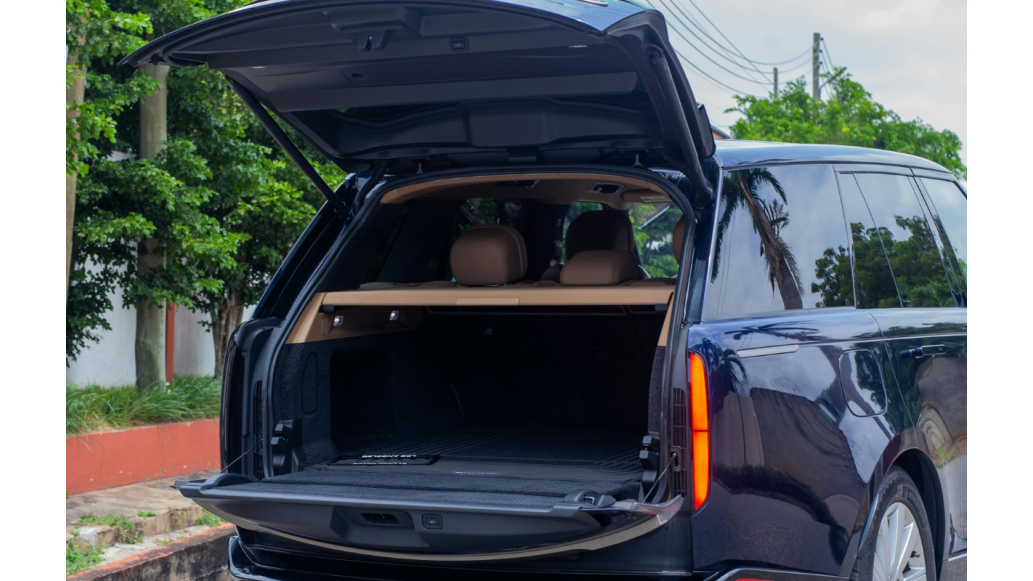
For years, home health was my side hustle. I would wrap up a full day in the clinic, load the trunk, and head out for evening visits. Home health strips away everything the clinic hands you. You get a living room with a coffee table in exactly the wrong spot, a dim hallway, a dog who would like to participate, and a patient who needs skilled care delivered with whatever you carried in from the car.
My trunk kit got refined the way these things always do. I overpacked, then underpacked, then repacked until every item earned its spot. These were my go-to items, along with the reasoning, the research, and a few lessons I learned the hard way.
1. Resistance Bands
If I could bring one piece of exercise equipment into a home, it would be a resistance band, and not only for the convenience. Lopes and colleagues compared elastic resistance training against machines and dumbbells in a systematic review and meta-analysis and found no meaningful difference in strength gains for the upper or lower limbs1.
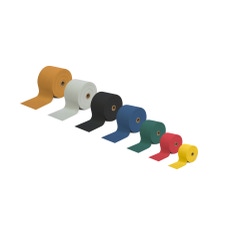
For home health I would reach for THERABAND Professional Non-Latex Resistance Bands. Latex free was not even an option when I started doing home visits, and asking about latex allergies before every band exercise was simply part of the routine. Now it does not have to be. The non-latex bands match the pull forces of the latex versions, follow the same color-coded progression, and have no scent or powder. I cut lengths from a 25-yard roll, left a strip behind for the home program, and documented progression by color.
2. Balance Pads
Falls put many of our patients on home health service in the first place, and balance training is how we break that cycle. The 2019 Cochrane review from Sherrington and colleagues found that balance and functional exercise reduced fall rates in community-dwelling older adults by 24 percent, and that programs pairing balance work with resistance training reduced them by around 34 percent2. Not many interventions in our field move a number that far.
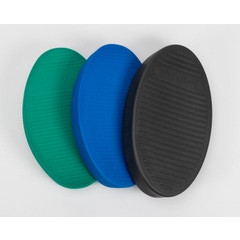
A foam pad turns any kitchen counter into a balance station. I carried the SISSEL Balancefit Pad because it wipes down between homes, has an anti-slip coating, and supports patients up to 264 pounds. THERABAND also makes color-coded Stability Trainers in progressive densities if you would rather document balance progression the same way you document band colors.
3. Diagnostic Tools
In outpatient, unstable vitals usually get flagged before the patient reaches you. In the home, you are the one doing the flagging. I took blood pressure and oxygen saturation at the start of visits far more often than I ever did in the clinic, and what I found changed my plan more often than I would like to admit. Gait speed deserves your attention, too. A pooled analysis of more than 34,000 older adults published in JAMA found that gait speed predicted survival about as well as combinations of traditional risk factors (3). The numbers you gather in a hallway carry real weight.
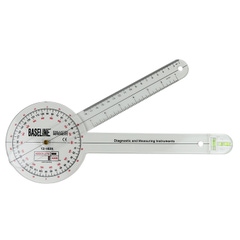
My kit held a blood pressure cuff, a stethoscope, a fingertip pulse oximeter, and a thermometer. Performance Health carries a full range of vital signs assessment products, so you can build out whatever your caseload calls for. For range of motion, I packed the Baseline Absolute Axis Goniometer. It has built-in levels that help you find true vertical and horizontal, which matters when you are measuring hip rotation on a soft mattress instead of a mat table.
4. A Stopwatch
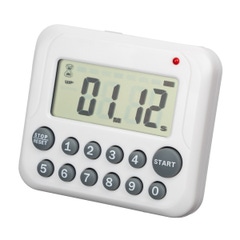
So much of what justifies our care in this setting is timed. Timed Up and Go, gait speed, the 30 second chair stand, five times sit to stand. Payers want objective, repeatable numbers, and a stopwatch produces them for a few dollars. Your phone can do it too, I know. But pulling out a personal phone mid-assessment reads poorly to some families, and mine came one soapy transfer away from the bathroom floor more than once. The Jamar Electronic Timer/Stopwatch clips to my bag, wipes down between visits, and does not ring during a session.
5. PPE
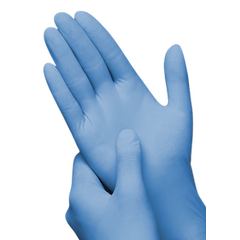
Infection control is harder in-home health because you control almost nothing about the environment. What you do control is what is on your hands. I kept a box of nitrile examination gloves in the car year-round. Nitrile resists punctures and tears, contains no natural rubber latex, and the textured fingertips hold up through transfers and wound care. Add hand sanitizer, masks, and disinfectant wipes for your equipment, and clean everything that touched the patient before it goes back in the bag.
6. ADL Equipment
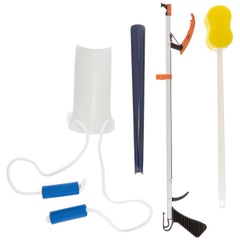
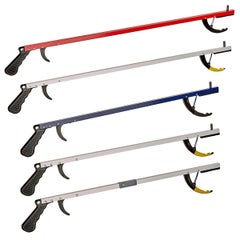
Home health gives us something outpatient never can, which is the actual room where the patient dresses and bathes. Carrying a small set of ADL tools means you can solve the sock problem at the moment it happens instead of describing a device the patient has never seen. The Sammons Preston Hip Kit bundles a reacher, shoehorn, sock aid, and bath sponge in one travel bag, which makes it a handy demo set for post-surgical patients managing hip precautions. I also kept a standalone Sammons Preston Reacher plus a dressing stick and sock aid on hand. I have watched patients get a little teary putting on their own socks for the first time since surgery. That moment tends to do more for adherence than anything I say.
7. One More Thing: A Gait Belt
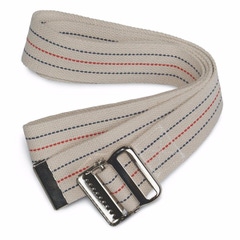
This one was not on my original outline, and I would not walk into a home without one. A gait belt protects the patient and protects your back, and there is no colleague down the hall to help you catch a stumble. Pick a wipeable or washable version, since it will touch every patient on your schedule, and consider a padded, handled style for heavier assist levels. It weighs a few ounces, and it changes what you can safely attempt.
Conclusion
None of this is fancy equipment, and that suits the setting. Home health asks you to bring the clinic with you: bands for strength, a pad for balance, diagnostics for the things the discharge summary missed, a stopwatch for the data, PPE for everyone, and ADL tools for the daily tasks that define independence. Pack what earns its place, keep it clean, and replace your bands more often than you think you need to.
Start Filling Your Trunk






References
- Lopes JSS, Machado AF, Micheletti JK, de Almeida AC, Cavina AP, Pastre CM. Effects of training with elastic resistance versus conventional resistance on muscular strength: a systematic review and meta-analysis. SAGE Open Med. 2019;7:2050312119831116.
- Sherrington C, Fairhall NJ, Wallbank GK, Tiedemann A, Michaleff ZA, Howard K, et al. Exercise for preventing falls in older people living in the community. Cochrane Database Syst Rev. 2019;1(1):CD012424.
- Studenski S, Perera S, Patel K, Rosano C, Faulkner K, Inzitari M, et al. Gait speed and survival in older adults. JAMA. 2011;305(1):50-58.
Medical Disclaimer: The information provided on this site, including text, graphics, images, and other material are for informational purposes only and are not intended to substitute for professional medical advice, diagnosis, or treatment. Always seek the advice of your physician or other healthcare professional with any questions or concerns you may have regarding your condition.