





 Canada
 UK
UK France
 Australia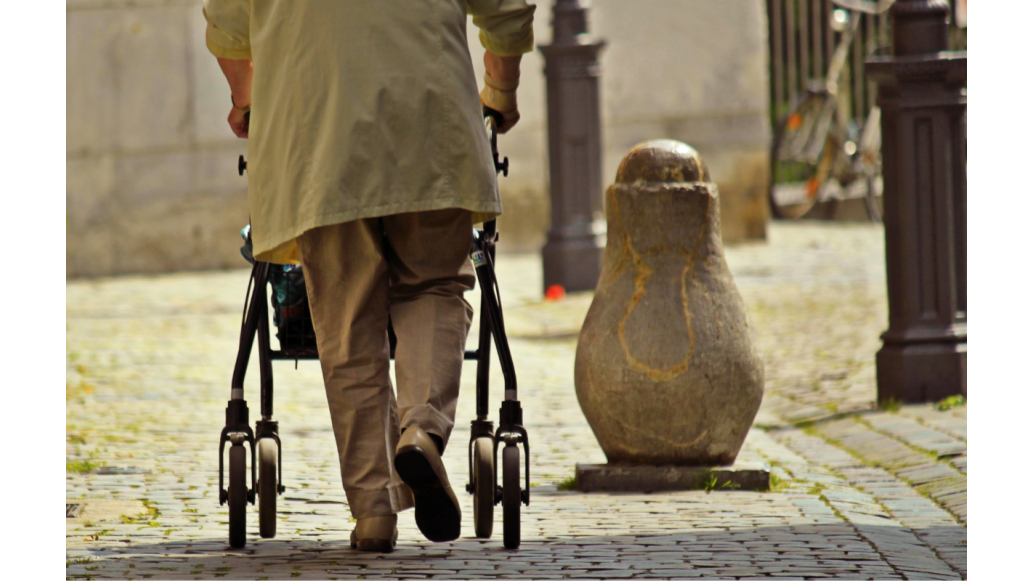
Device selection is a clinical judgment with biomechanical and behavioral consequences, yet it is routinely executed as a disposition formality in the closing minutes of a visit. The downstream costs are predictable: a device abandoned at home, or one that imposes a gait pattern and stability profile worse than the patient's unaided baseline. Selecting the category is seldom the difficulty. The discriminations within it are.
The evidence base warrants a measure of caution. Cross-sectional and longitudinal data show higher fall rates among device users than non-users, an association heavily confounded by frailty and indication, but one that also captures the genuine iatrogenic risk of a mismatched or misfitted device1. The assistive device is an adjunct, not an intervention in its own right; the most robust fall-reduction evidence continues to favor progressive exercise and multifactorial programs2,3. Device selection and fitting, however, are squarely within our control, which is the argument for treating them with more rigor than the visit usually affords.
What follows is not a primer on categories but a working-through of the decision points, with specific product recommendations for each.
Canes
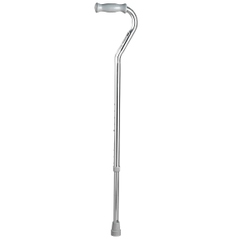
Canes are appropriate for unilateral, comparatively mild presentations: early degenerative joint disease, mild vestibular or proprioceptive balance loss, a unilateral weakness the patient is already compensating for adequately. Their mechanical contribution is modest and frequently overstated. A cane held contralaterally and advanced with the affected limb reduces the hip abductor moment required for frontal-plane stabilization, lowering the joint reaction force at the affected hip; the limb offloading itself is on the order of 10 percent4. That distinction is worth making explicit with patients and referral sources who expect a cane to do the work of a walker. The candidate still requires the trunk control, grip integrity, and upper-limb capacity to use it, with sufficient standing balance to tolerate a narrow base of support.
For that patient, the Sammons Preston Adjustable Aluminum Cane is a clean single-point option: lightweight, with tool-free height adjustment.
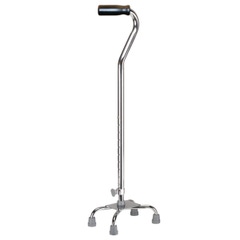
A quad cane provides a wider base and static, free-standing support, earning its indication in the patient who needs to rest weight intermittently, presents with greater weakness, or sits earlier in a neurologic recovery. The trade-offs are well established: greater mass, slower cadence, and the requirement that all four feet load simultaneously, which compromises performance on stairs and uneven terrain. The Drive Adjustable Quad Cane addresses this category well, with a 29 to 38 inch range, 300 pound capacity, and a selectable small or large base to titrate base of support against maneuverability. Where sit-to-stand is itself a rate-limiter, the HealthSmart Sit-to-Stand Quad Cane provides a secondary lower handhold to assist the transfer.
A patient loading any cane heavily enough to alter their postural alignment around it has outgrown the device rather than mis-sized it. That presentation is the indication to progress to a walker.



Walkers
Walkers are indicated when the clinical requirement is a large, stable base of support combined with substantive upper-extremity weight bearing: a post-surgical weight-bearing restriction, bilateral lower-extremity weakness, or instability beyond what a cane can address.
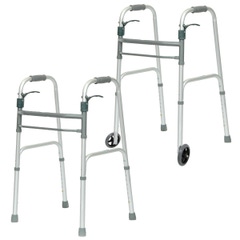
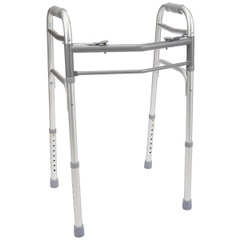
A standard walker remains the most stable option specifically because it is non-rolling; it does not translate until lifted and placed. That property is what a strict NWB or TTWB precaution demands, and what an appreciably unstable patient requires. The cost is both metabolic and kinematic: lifting the frame at each step is energy-expensive, eliminates any reciprocal pattern, and reduces velocity, and it presupposes adequate upper-limb strength and standing balance. It is suited to household distances rather than community ambulation. The ProBasics Sure Lever Release Folding Walker is a defensible clinic-and-home selection: its lever release allows the patient to collapse the frame without relinquishing grip, a non-trivial advantage for an unsteady patient, and it is configurable with or without 5 inch wheels as the patient progresses.
The addition of front wheels resolves the energy penalty. The patient advances the device by pushing rather than lifting, the rear glides supply braking resistance under load, and the configuration preserves most of the available stability while restoring a closer approximation of continuous, reciprocal gait4. For the deconditioned or balance-impaired older adult without a weight-bearing restriction, the front-wheel walker is generally the more functional prescription. The Days Two Button Walker is a sound option, with dual-release mechanisms that deliver an audible locking confirmation.
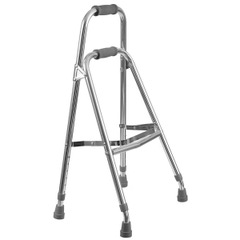
For the hemiparetic patient, or any patient functionally restricted to a single upper extremity, neither configuration is viable. A hemi-walker is the appropriate intermediate: greater stability than a cane, with full one-handed operation. The Folding Hemi-Walker serves that indication and additionally assists sit-to-stand.

Rollators
Rollators are among the most frequently misprescribed devices in this set, typically because they are selected as walkers. They are not weight-bearing devices. A four-wheeled rollator is engineered to sustain momentum and provide a seat, not to offload a limb, and it is appropriate only for a higher-functioning patient: adequate standing balance, intact hand function, sound braking judgment, with endurance rather than stability as the operative limitation4. The prototypical candidate has functional gait mechanics but a cardiopulmonary or general endurance ceiling that necessitates frequent rest.
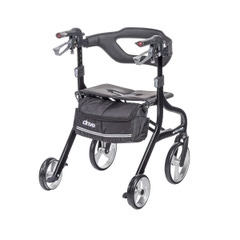
In that patient, the rollator is the device that enables community participation: it accommodates cardiopulmonary limitation, supports the patient whose objective is remaining active beyond the home, and its rolling-assisted gait better preserves velocity and cadence than a lifted-walker pattern. Treat the seat as a clinical feature rather than an amenity, since the availability of rest is frequently what renders the outing achievable. The Drive Nitro Sprint Rollator is a strong general recommendation, with a 350-pound capacity, larger casters for thresholds and uneven surfaces, and an integrated slow-down brake for grade control.
The failure mode is specific and merits direct screening. A patient who loads a rollator as they would a walker will displace it anterior to their base of support, a documented fall mechanism rather than a theoretical one4. Where braking judgment or hand function is in question, the rollator is contraindicated irrespective of patient preference.
Selection Beyond Category
With the category established, several variables warrant deliberate weighting rather than a reversion to habitual prescribing.
Trajectory
Establish whether you are equipping the patient for a three-week or a three-year horizon. Within a single post-surgical episode, a patient may progress from a standard walker to a front-wheel walker to a cane. Prescribe to current status, and articulate the progression so it is interpreted as expected rather than as deterioration.
Diagnosis and Precautions
Weight-bearing status and any progressive pathology bias the decision toward greater support. A stable, plateaued presentation affords latitude to prioritize lifestyle congruence.
Upper-Extremity and Hand Function
This constrains the available options more than is generally anticipated. Deficits in grip, dexterity, or coordination can preclude brake management outright, or render a non-rolling walker untenable.
Cognition
A device confers safety only if operated correctly on every repetition, and device management itself imposes an attentional cost. Cognitive impairment in combination with a walking device is associated with increased recurrent falls, not fewer5. Where carryover is uncertain, weight the decision toward simplicity and intrinsic stability.
Environment
Doorway widths, thresholds, stair configuration, flooring, and whether the patient lives alone. A device that performs in the clinic may be unusable in the home it is destined for.
Patient Goals
Establish these explicitly. The community ambulator and the household ambulator warrant different devices despite identical impairment profiles.
Fit, and Fit Drift
The fitting mechanics require no rehearsal for this readership. The relevant problem is that their familiarity invites them to be rushed. Verify handle height against the patient in the footwear they actually ambulate in, not in socks or clinic footwear, and re-verify it as footwear and habitual posture shift over the episode of care. A device fitted once at evaluation and not subsequently rechecked is a recurrent and underrecognized source of the gait deviations later attributed to the patient.
Observe the device under representative conditions. Supervised open-corridor gait is not a sufficient test. Watching the patient negotiate a doorway, a threshold, a curb, or a sit-to-stand exposes problems that hallway observation will not. And treat selection as iterative: as strength, balance, and endurance change, the appropriate device changes with them, so incorporate a device review into reassessment rather than presuming the initial determination still holds6.
Adherence
A well-selected, well-fitted device still fails if the patient declines to use it, and nonuse is common. For many patients, particularly those with an extended history of independence, the device is construed not as equipment but as a prognostic statement. Addressing that interpretation directly is generally more effective than circumventing it.
Reframe the device in functional rather than declinist terms. It is not the instrument of confinement; it is the instrument that restores the grocery store, the garden, the grandchildren. Anchored to a goal the patient genuinely values, adherence improves. Engage the household as well, since a partner who normalizes the device contributes more to carryover than clinician instruction alone.
Close the loop on maintenance. Worn tips, loosened grips, and stretched brake cables convert a safe device into a hazardous one; the patient or a family member should know what to inspect and at what interval. The device that prevents the fall is the one the patient endorses and maintains.
Product Recommendations
Within a category, the specific product remains consequential: mass, fold mechanism, seat height, caster diameter, accessory compatibility, and grip all bear on real-world use and the probability of abandonment. The recommendations below are current PerformanceHealth.com products, which consolidates sourcing to a single referral point for patients and families.
Canes
The Sammons Preston Adjustable Aluminum Cane for a standard single-point cane. The Drive Adjustable Quad Cane for a wider, free-standing base. The HealthSmart Sit-to-Stand Quad Cane when sit-to-stand is a rate-limiting factor.
Walkers
The ProBasics Sure Lever Release Folding Walker as a standard walker, configurable with or without wheels. The Days Two Button Walker for a front-wheel walker. The Folding Hemi-Walker for the patient restricted to one upper extremity.
Rollators
The Drive Nitro Sprint Rollator for a sturdy, community-ready four-wheeler with a seat and reliable braking.
A patient discharged with an accurately selected device, a verified fit, and an explicit understanding of the anticipated progression is substantially more likely to use it, trust it, and remain mobile.
References
- Q.G. Liu, et al. Longitudinal Relationship between Mobility Device Use, Falls and Fear of Falling Differed by Frailty Status among Community-Dwelling Older Adults. The Journal of Nutrition, Health and Aging. 2023. https://www.sciencedirect.com/science/article/pii/S1279770723002403
- Appeadu MK, Bordoni B. Falls and Fall Prevention in Older Adults. StatPearls. Updated 2023. https://www.ncbi.nlm.nih.gov/books/NBK560761/
- Guirguis-Blake JM, Perdue LA, Coppola EL, Bean SI. Interventions to Prevent Falls in Older Adults: Updated Evidence Report and Systematic Review for the US Preventive Services Task Force. JAMA. 2024. https://www.uspreventiveservicestaskforce.org/uspstf/recommendation/falls-prevention-community-dwelling-older-adults-interventions
- Mobility Assistive Device Use in Older Adults. American Family Physician. June 15, 2021. https://www.aafp.org/pubs/afp/issues/2021/0615/p737.html
- Kuo FL, Liao ZY. Assessing Mobility and Fall Risks in Taiwan's Older Adult Population: A Longitudinal Study. Innovation in Aging. 2024. https://www.ncbi.nlm.nih.gov/pmc/articles/PMC11692725/
- An Observational Study of the Impact of Professional Walking Aid Prescription on Gait Parameters for Individuals with Suspected Balance Impairments. Heliyon. 2024. https://www.sciencedirect.com/science/article/pii/S2405844024136808
Medical Disclaimer: The information provided on this site, including text, graphics, images, and other material are for informational purposes only and are not intended to substitute for professional medical advice, diagnosis, or treatment. Always seek the advice of your physician or other healthcare professional with any questions or concerns you may have regarding your condition.