





 Canada
 UK
UK France
 Australia
Chronic pain is not acute pain that has persisted. It is a distinct clinical entity, and the most consequential error in its management is continuing to treat it as a tissue problem after it has stopped being one. We all recognize the patient: referred for a structural complaint, imaged repeatedly, cycled through interventions aimed at a periphery that no longer explains the presentation. The reasoning error sits upstream of the treatment plan, in a failure to recognize that the pain mechanism has changed.
Rehabilitation has an evidence-supported role, but only when the intervention is matched to the mechanism rather than to the imaging. What follows works through the clinical reasoning: what drives persistent pain, how to recognize the patient in whom central mechanisms predominate, and the active and adjunctive tools that change outcomes, with product recommendations.
What is Driving the Pain
Pain classification recognizes three mechanistic descriptors: nociceptive pain, arising from actual or threatened tissue damage; neuropathic pain, arising from a lesion or disease of the somatosensory system; and nociplastic pain, formalized by the International Association for the Study of Pain in 2017, which arises from altered nociception without clear evidence of tissue damage or a somatosensory lesion1. The three are not mutually exclusive. Mixed presentations, a nociplastic component layered onto a nociceptive or neuropathic driver, are the rule rather than the exception in chronic low back pain, osteoarthritis, and persistent postsurgical pain1.
The mechanism that separates persistent pain from acute pain is central sensitization: an increased responsiveness of nociceptive neurons in the central nervous system to normal or subthreshold input2. Clinically, it produces pain that outlasts tissue healing, pain amplified beyond what the structural findings predict, and symptoms that expand beyond the original site. It is not a psychological phenomenon and it is not malingering. It is a measurable change in nervous system processing, and it explains why an intervention aimed solely at the periphery often fails2.
Recognizing the Patient
Recognition is the pivot of the plan, and it is a clinical skill rather than an imaging finding. The features that should raise suspicion of a dominant central component are consistent: pain disproportionate to and poorly correlated with structural findings, a widespread distribution that does not respect a single dermatome or joint, hyperalgesia and allodynia, and a history of symptoms spreading over time3. These frequently travel with a cluster of associated features, including disrupted sleep, fatigue, and cognitive complaints, and with the psychological dimensions that modulate the pain experience: catastrophizing, kinesiophobia, and fear-avoidant behavior.
Validated instruments support, rather than replace, this clinical judgment. The Central Sensitization Inventory, along with tools such as the Widespread Pain Index and Symptom Severity Scale, helps quantify the central contribution and track it across an episode of care3. The objective is a mechanistic phenotype, nociceptive, neuropathic, nociplastic, or mixed, because that phenotype, not the diagnosis written on the referral, should drive what you do next.
Therapeutic Exercise as the Cornerstone
Across guidelines and the chronic pain literature, active exercise is the first-line intervention, and no passive modality matches it4. Its value is not reducible to strength or tissue capacity. Graded, well-tolerated loading drives exercise-induced hypoalgesia through descending inhibitory pathways, and it functions as graded exposure, countering the kinesiophobia and avoidance that maintain disability. For the centrally sensitized patient, exercise is a mechanism-targeted intervention.
The prescription has to be individualized and, ideally, multicomponent, combining aerobic work with resistance and motor control rather than defaulting to a single modality4. Two principles matter more than the exercise selection. The first is graded, sub-threshold progression: load that the patient's nervous system reads as safe, advanced incrementally, rather than load that provokes a flare and confirms their fear. The second is carryover, because the dose that changes anything is the dose performed between visits.
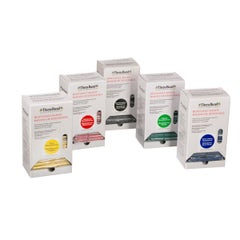
Color-coded elastic resistance is a backbone for this. The THERABAND Professional Resistance Bands provide an incremental progression that lets you titrate load precisely and document it from one level to the next, and they translate into a home program the patient can sustain.
Pain Neuroscience Education
If central sensitization is the mechanism, the patient's understanding of their pain becomes part of the clinical picture. A patient who believes their pain is an accurate readout of ongoing tissue damage will, reasonably, avoid the loading that would help them. Pain neuroscience education addresses that: it reconceptualizes pain as a protective output of a sensitized nervous system rather than a damage meter.
The evidence is strongest when education is delivered as an adjunct to active treatment rather than on its own. Combined with therapeutic exercise, pain neuroscience education produces meaningful reductions in pain intensity and disability, and it targets kinesiophobia and catastrophizing, the cognitive drivers that otherwise limit exercise tolerance5. Education and graded exercise are not two interventions but one: the education makes the loading tolerable, and the loading makes the education credible.
Adjuncts that Support Engagement
Passive and symptomatic modalities have a legitimate but bounded role. They can reduce symptom intensity enough to make the active work possible, and they give the patient a means of self-management between visits, which supports self-efficacy. What they do not do is resolve central sensitization, and the clinical error to avoid is letting an adjunct quietly become the treatment.
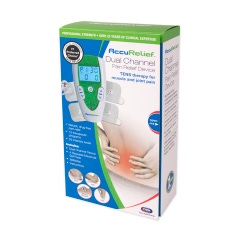
Transcutaneous electrical nerve stimulation is the clearest example. The evidence for TENS in chronic pain is low to moderate in certainty, and the effects are modest and short-lived6, but it is low-risk, non-pharmacological, and patient-controlled, which makes it a reasonable bridge: a way to modulate symptoms enough to engage in exercise, and a tool the patient operates independently. A Dual Channel TENS unit, with preset and adjustable programs and a two- or four-pad configuration, is appropriate for both in-clinic use and a structured home protocol.
Topical analgesics serve a similar function. A menthol-based agent such as Biofreeze Professional provides non-systemic, non-opioid symptomatic relief, useful for a patient managing a flare or trying to stay active without escalating systemic medication. Frame it honestly with the patient as symptom relief that supports function, not as treatment of the underlying problem.
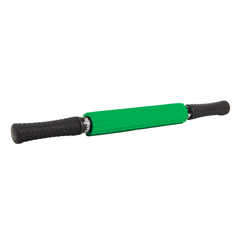
Soft tissue self-treatment belongs in the same category. A tool such as the THERABAND Roller Massager+ lets the patient address local muscle tone and soreness independently. The clinical value is less the tissue effect than the agency: a self-directed action the patient can take, which counters helplessness and reinforces an active rather than a passive coping style.
Goals, Pacing, and Quality of Life
The final reasoning shift is the goal itself. For many of these patients, complete abolition of pain is not a realistic endpoint, and setting it as the target primes the patient to read every flare as failure. The more defensible objective, and the one the evidence supports, is improved function, participation, and quality of life, with pain reduction as a frequent but secondary result.
That reframing changes how the plan is built. Graded activity and pacing, advancing by quota rather than by symptom, teach the patient that activity is safe and progressible, and they break the boom-and-bust cycle that drives much of the disability. Flares should be normalized in advance as expected events with a plan attached, not as evidence of damage or treatment failure. The therapeutic relationship is itself part of the intervention: a clinician who is consistent, validating, and unambiguous that the pain is real, while remaining clear that the nervous system can be retrained, gives the patient the security to do the active work. Self-efficacy is not a soft outcome here. It is one of the better predictors of who improves.
Product Recommendations
The tools below are current PerformanceHealth.com products, which consolidates sourcing to a single referral point for patients and families. Each is an adjunct to, not a substitute for, an active plan.
Therapeutic exercise. The THERABAND Professional Resistance Bands for graded, color-coded resistance with objective progression and home carryover.
Electrotherapy. The Dual Channel TENS for patient-controlled, non-pharmacological symptom modulation as a bridge to active treatment.
Topical analgesic. Biofreeze Professional for non-systemic, non-opioid symptomatic relief during flares and activity.
Soft tissue self-management. The THERABAND Roller Massager+ for self-directed soft tissue work that reinforces active coping.
Chronic pain is treatable, but it responds to interventions matched to its mechanism rather than to its imaging. Recognize the centrally sensitized patient, lead with education and graded exercise, use adjuncts to enable that work rather than to replace it, and measure success in function rather than in the absence of pain.



References
- Nijs J, Malfliet A, Nishigami T. Nociplastic pain and central sensitization in patients with chronic pain conditions: a terminology update for clinicians. Brazilian Journal of Physical Therapy. 2023;27(3):100518. https://www.rbf-bjpt.org.br/en-nociplastic-pain-central-sensitization-in-articulo-S1413355523000394
- Treede RD, Hoheisel U, Wang D, Magerl W. Central sensitization: clinical utility of a physiological concept for the International Statistical Classification of Diseases and Related Health Problems and for nociplastic pain. PAIN. 2022;163(Suppl 1):S99-S107. https://pubmed.ncbi.nlm.nih.gov/36099342/
- Central Sensitization and Nociplastic Pain: Shared Mechanisms in Fibromyalgia, Osteoarthritis, and Inflammatory Arthritis. Journal of Pain Research. 2025. https://www.tandfonline.com/doi/full/10.2147/JPR.S571311
- The Role of Physical Exercise in Chronic Musculoskeletal Pain: Best Medicine, A Narrative Review. Healthcare. 2024;12(2):242. https://www.mdpi.com/2227-9032/12/2/242
- Sanchez-Robalino A, Sinchi-Sinchi H, Ramirez A. Effectiveness of Pain Neuroscience Education in Physical Therapy: A Systematic Review and Meta-Analysis. Brain Sciences. 2025;15(6):658. https://www.mdpi.com/2076-3425/15/6/658
- Verville L, Hincapie CA, Southerst D, et al. Systematic Review to Inform a WHO Clinical Practice Guideline: Benefits and Harms of Transcutaneous Electrical Nerve Stimulation (TENS) for Chronic Primary Low Back Pain in Adults. Journal of Occupational Rehabilitation. 2023;33(4):651-660. https://link.springer.com/article/10.1007/s10926-023-10121-7
Medical Disclaimer: The information provided on this site, including text, graphics, images, and other material are for informational purposes only and are not intended to substitute for professional medical advice, diagnosis, or treatment. Always seek the advice of your physician or other healthcare professional with any questions or concerns you may have regarding your condition.