





 Canada
 UK
UK France
 Australia
While light therapy, also known as Photobiomodulation, may feel like a new modality, the reality is that light has been used for hundreds or even thousands of years as a treatment tool for all kinds of ailments. For most of human history, we have harnessed the power of sunlight to get its benefits, even though most people never realize how important it truly is to our lives.
Over the past few decades, those of us that live in a modern western culture have evolved to spending almost all of our time indoors. This has led to a number of health concerns that affect our bodies in countless ways.
In the 1960s, it was discovered that red light lasers can have a positive effect on tumors in rats, which started a brand-new area of science to look at the effects of red and near infrared light on the body. In the early 2000s, cold lasers hit the market and clinics everywhere began using them for their healing properties, making them extremely popular, despite their high cost. But, now that LED technology has evolved, photobiomodulation is more effective, cheaper and accessible than ever.
How Red Light Therapy Works
There is a large list of mechanisms that take place within the body when we expose our cells to the proper wavelengths of red and near infrared light. Most of these mechanisms take place at the cellular level, which can lead to profound outcomes.
The main mechanism that takes place in the body is improved ATP synthesis. When our cells are exposed to red and near infrared light, the mitochondria produce more ATP (energy), which makes our cells more efficient at whatever that cell’s job is. This improved cellular function is what allows us to treat a wide variety of body parts and conditions with red light therapy.
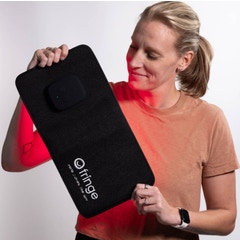

Photobiomodulation also has positive effects on the body’s inflammatory systems and helps to manage oxidative stress. Additionally, we see improved blood flow, oxygenation, formation of capillaries, and sleep/wake cycles. Essentially, our cells become stronger, more robust and more resilient when exposed to red light therapy.
Top Reasons to Use Red Light Therapy
There are many reasons to use red light therapy in your clinic. Here are the top 10 reasons, according to the research:
1. Reduce inflammation: Red and Near Infrared light have anti-inflammatory effects, and unlike anti-inflammatory medications (such as NSAID’s), do not cause side effects.
2. Improve skin health: Red and Near Infrared lights are being widely used in spas and dermatology clinics for their effects on skin health, in addition to at-home use. Photobiomodulation can improve the appearance and healing of scars, and it is also helpful in the treatment of wrinkles, psoriasis, acne, rosacea, burns, and herpes.
3. Decrease pain: Pain creates a huge burden of disability, both personal and economic. There is evidence that Photobiomodulation decreases many types of pain, including knee, neck, low-back, temporomandibular joint, and post-surgical pain. Photobiomodulation can also reduce pain associated with arthritis and fibromyalgia.
4. Improve athletic performance: Photobiomodulation has been found to improve athletic performance in several ways, including decreasing muscle damage associated with exercise, decreasing muscle fatigue, improving muscle capacity, and speeding post-exercise recovery. Photobiomodulation increases ATP production, which is needed for exercising muscles.
5. Reduce depression and anxiety: Depression and anxiety are highly prevalent mental disorders, and currently available pharmaceutical medications have limited efficacy and associated side effects. Photobiomodulation has been shown to reduce depressive symptoms in both humans and animals, likely due to improvements in mitochondrial function, increased brain blood flow, and decreased neuroinflammation.
6. Improve cognitive function: Photobiomodulation has been shown to improve cognitive function in both healthy and diseased patients. Clinical trials in healthy subjects have shown that Photobiomodulation can improve outcomes including executive function, which consists of cognitive skills used for planning and performing tasks, as well as memory. People with traumatic brain injury (TBI) and stroke have also been shown to benefit from Photobiomodulation, due to upregulation of brain repair mechanisms including the synthesis of new neurons.
7. Speed healing from injury: It has already been mentioned that photobiomodulation has positive effects on muscle tissue, including speeding recovery from post-exercise damage, as well as on wound healing, such as from burn injuries. Photobiomodulation can also speed healing from injuries to bone, including fractures and more complex bone injuries that require the use ceramic materials. Tendon injuries also benefit from Photobiomodulation, with research showing that Photobiomodulation increases the amount of collagen, which provides structural support during healing.
8. Promote fat loss: A somewhat surprising effect of photobiomodulation is to promote fat loss. This is particularly true when combined with exercise.
9. Improve immune function: Although an in-depth investigation of how Photobiomodulation affects the immune system specifically has yet to be done, there is strong evidence that Photobiomodulation improves immune function, as evidenced by its beneficial effects in many immune-related disorders.
10. Improve sleep: Light is a primary regulator of the body’s circadian rhythm, so it is not surprising that Photobiomodulation has effects on sleep. Application of Photobiomodulation during wakefulness improves sleep quality in people with cognitive decline, Guillain-Barré Syndrome, fibromyalgia and stroke. Interestingly, sleep duration decreased with full body Photobiomodulation in elite athletes, while other parameters such as exercise recovery improved.
Conclusion
If you’re interested in buying a home Photobiomodulation device, you have many options. When choosing a device, first look for a one that emits both red and NIR light. Second, look at the power of the device. While many high-powered red light therapy units are available (usually at a higher price point), research shows that when it comes to light, more is not necessarily better. This is because treatment to many tissues has a “biphasic” effect, where lower levels are beneficial while higher levels are not. But you don’t want to go too low, or you won’t get the treatment effect. Many of the cheaper devices on the market are underpowered and provide very little irradiation. Lookj for devices are designed to mimic exposure to the sun, with consideration of the range of light exposure used in scientific research. Lastly, consider the type of device that is most appropriate for your condition. Photobiomodulation devices come in panels and wearable forms such as wraps, with wearables providing more flexibility in terms of application and panels being better for general irradiation of larger surfaces.
Medical Disclaimer: The information provided on this site, including text, graphics, images, and other material are for informational purposes only and are not intended to substitute for professional medical advice, diagnosis, or treatment. Always seek the advice of your physician or other healthcare professional with any questions or concerns you may have regarding your condition.