




 Canada
 UK
 France
 Australia

What is foam rolling and why do people do it?
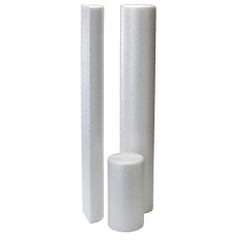
Foam rollers are devices made of foam available in cylindrical and half-roll shapes. People use foam rollers for self-massage to relieve pain and increase athletic performance. They are often used on tight or sore muscles to relieve tension at trigger points.
|
Who should use foam rolling?
- Athletes before and after practices and games
- People who want to warm up and cool down after exercise
- Those who sit for long periods of time (office workers, truck drivers, etc.)
- People with tight or aching muscles
Who shouldn’t use foam rolling?
- People with open wounds or fractures
- People with conditions including deep vein thrombosis, advanced osteoporosis, or painful neuropathy
- Those with flare-ups of rheumatoid arthritis
Check with your doctor before you start foam rolling.
How does foam rolling work?
Many people believe foam rolling relieves pain through self-myofascial relief (SMR). The fascia is the connective tissue that covers and supports your muscles. According to this theory, foam rolling massages the fascia to break down knots and increase your muscles range of motion (ROM). However, research has not confirmed that this is why foam rolling relieves pain.
Another theory suggests that foam rolling is really targeting your nervous system. The foam roller applies pressure to receptors, stimulating the nervous system, and reducing stress hormones, like cortisol, to relieve pain. Some research backs this theory, suggesting foam rolling may work by suppressing pain centers and not loosening muscle tissue.
The Do’s and Don’ts of Foam Rolling
- DON’T proceed if it is extremely painful. Foam rolling can be uncomfortable, but shouldn’t cause extreme pain.
- DO foam roll slowly. Move slowly (about one inch per second) and consistently to roll over your muscles.
- DON’T overwork one area. Spend about 30-90 seconds per muscle group and not more than 20 minutes overall. If a specific area remains tight or consistently problematic, have a medical professional check it out.
- DO stretch and move around afterwards.
- DON’T roll directly over your bones and joints, and avoid your lower back and neck areas.
Foam Roller Research
Pain Relief: In one study, foam rolling was shown to reduce quadricep muscle soreness. It has also been proven effective for relieving DOMS (delayed onset muscle soreness) after exercise.
Improving Range of Motion: Another study states that foam rolling appears to improve your range of motion without negatively impacting muscle performance.
Improving Athletic Performance: Foam rolling is associated with improving movements including squats, hurdles, leg raises, and trunk stability. It also increased joint flexion in the knees and hips, when landing from a maximum vertical jump.
Hear from Dr. David Bahm, PhD about his roller massage and foam roller research findings.
Foam Rolling Compared to…
Stretching: Static stretching and foam rolling both offer similar increases in range of motion, but foam rolling doesn’t have the same impairments as stretching.
PNS Stretching: Proprioceptive neuromuscular facilitation stretching combines stretching with a contract-relax or hold-relax technique. Research found that PNS stretching and foam rolling were equally effective for increasing hamstring flexibility.
How to Choose the Right Foam Roller for You


Foam rollers come in full and half rolls of different lengths and textures. The best option depends on what you’re using it for.
Length: Long 36” rollers are a great choice for first timers. They’re versatile, long enough to span your back and more stable for your quads and hamstrings. Thinking about using a 12" roller? This option is more portable and ideal if you have limited space.
Shape: Round rollers are definitely the most common option, but most places also sell half-round options. Half-round rollers offer more stability and are often used for leg and foot stretches.
Texture: Your average foam roller is smooth for even pressure. This is a good option for beginners, but you have other choices. Textured rollers provide a deeper, more targeted muscle massage. They are typically more expensive and better for working out knots. Looking for the best of both worlds? Add a TheraBand Foam Roller Wrap when you want texture and take it off when you want a smooth roller.
Density: Another important consideration is your roller’s density. Foam rollers come in different levels of soft and hardness. If you’re new to foam rolling, consider a softer roller. Firmer options are more durable and best for deep tissue massage. Wraps can also be added to change the firmness level of your roller.
Find the best wrap for your needs.
Alternatives: Foam rollers are useful, but even a 12” option is pretty big to cart along with you to the gym, because of the large diameter. Roller massagers, also called massage sticks, are a lot easier to toss in your gym bag. The small size makes them best for targeted on-the-go massages. Or give yourself a muscle massage using a longer stick with rotating spindles. Some people like to bring massage balls when travelling, due to their small size. If you want to specifically target your feet, a foot roller might be just what you’re looking for.
Foam Rolling Specific Muscles
Foam rolling can be used for a full body massage or to work on specific problem areas. Wondering where to get started? Try these exercises to warm-up your muscles or relieve tightness and pain.
Quadricep Release

- Lay across the roller with your elbows and forearms on the ground
- Pull yourself forward and backward using your arms to roll over your quadricep
- Stack one leg on top of the other for a more isolated release
Isolated Hamstring Release

- Sit on the floor behind your foam roller
- Place one thigh across the roller and the other leg over the roller, planting that foot on the floor
- Use your hands to lift yourself up and roll on your hamstring
- Switch sides and repeat
Gastroc-Soleus Release

- Start by sitting behind the foam roller and draping both calves over the roller
- Keep your hands on the floor and lift upward
- Roll back and forth on your calves
Thoracic Release

- Sit in front of your foam roller
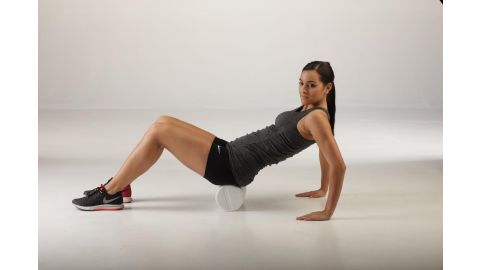
- Lay back with your upper back on the roller
- Place your hands behind your head and link your fingers
- Anchor your heels to the floor
- Begin breath-work and slowly move backward on each exhale
Looking for more foam rolling exercises? Check out Performance Health Academy and get started today!
References
Cheatham, S. W., Kolber, M. J., Cain, M., & Lee, M. (2015). THE EFFECTS OF SELF-MYOFASCIAL RELEASE USING A FOAM ROLL OR ROLLER MASSAGER ON JOINT RANGE OF MOTION, MUSCLE RECOVERY, AND PERFORMANCE: A SYSTEMATIC REVIEW. International journal of sports physical therapy. Retrieved from https://bit.ly/2vAHBST
Gleiber, M. (n.d.). Do’s and Don’ts of Foam Rolling for Back Pain. Retrieved from https://bit.ly/2txeIUz
Heid, M. (2017). You Asked: Should I Use a Foam Roller?. Time Magazine. Retrieved from https://bit.ly/2jva32G
Moore, R. (2016). Foam Rolling is Beneficial...Right? Performance Health Academy. Retrieved from https://bit.ly/2SMeqbn
Pearcey, G. E., Bradbury-Squires, D. J., Kawamoto, J. E., Drinkwater, E. J., Behm, D. G., & Button, D. C. (2015). Foam rolling for delayed-onset muscle soreness and recovery of dynamic performance measures. Journal of athletic training. Retrieved from https://bit.ly/2fWS3s5
Should you add foam rolling to your workout routine?. (2018). Harvard Health Publishing. Retrieved from https://bit.ly/2BJc4Q0
Medical Disclaimer: The information provided on this site, including text, graphics, images and other material, are for informational purposes only and are not intended to substitute for professional medical advice, diagnosis or treatment. Always seek the advice of your physician or other healthcare professional with any questions or concerns you may have regarding your condition.
The Benefits of Foam Rolling
Foam rolling is a self-myofascial release technique used to relieve muscle tightness, soreness, and inflammation. Self-myofascial release provides the patient with the ability to control the healing and recovery process by applying pressure in specific locations.
Instruct your patients to use the roller on more tender areas or trigger points to decrease density and over-activity of the muscle. Foam rollers can be used before, during, or after exercise to strengthen the core, build balance, or improve range of motion.
Encourage your patients to try this strength training method using these exercises and guidelines!
Choosing a Foam Roller
Foam rollers come in a variety of densities, so individuals need to be careful in choosing the right one to suit their needs. Soft rollers have a smooth, soft foam surface and are great for beginners. Deep tissue rollers have extra firm ridges which stimulate deeper layers of muscles for long-lasting pain relief.
It is also important to take into consideration shape and size. Shorter rollers are more effective for smaller areas such as the arms and calves. To improve the experience of soft foam rollers, a rigid muscle roller wrap can be used to offer different levels of firmness. These wraps easily attach with hook & loop strapping.
Our Recommended Rollers




Improve Athletic Performance & Strength With Foam Rolling
Used prior to physical activity, the foam roller helps increase blood flow to working muscles and connective tissue. This makes patients more pliable and receptive to increases in range of motion.
Adding a foam roller to an exercise gives standard moves a challenging twist, increasing muscle strength and stability. Balancing on a foam roller requires the body to use more muscles, especially the core, to perform the move. To improve athletic performance, guide your trainees through some of these strength moves in their next workout routine!
Wall Squats
- Position the foam roller between the wall and your mid back
- With your feet shoulder-width apart, squat down into the roller
- Once the roller touches your shoulder blades, slowly stand back up
- Repeat for a desired number of reps
Reverse Rolling Lunges
- Position the foam roller directly behind you
- Position your right leg so that the top of your foot is touching the roller
- Keeping your left knee over your ankle, bend your knee 90 degrees
- Roll your back shin over the foam roller
- Rise up and repeat for a desired number of reps
- Switch to the opposite side
Tricep Dips
- Sit on the floor with the roller directly behind you
- Reach both of your arms behind your hips and position your hands shoulder-width apart on the foam roller
- Extend your legs so that your heels are the only thing touching the floor
- Bend your elbows 90 degrees and lift up for a desired number of reps
Side Plank with Leg Raise
- Lie on your left side with your left hand on the middle of the foam roller
- Lift your hips, aligned with your shoulders, and raise your right arm straight at shoulder height
- Lift your right leg up to hip height, without lifting or lowering your hips
- Return your foot back to the floor and repeat for a desired number of reps
- Switch to the opposite side
Rolling Plank
- Lie on your stomach and position the tops of your feet on the foam roller
- Get in a forearm plank position (make sure your elbows are in line with your shoulders)
- Roll your body slightly forward without letting your back arch or round
- Return to starting position and repeat for desired number of reps
Muscle Release Exercises to Do with a Foam Roller
Gluteal Release
- Find a relatively open area with a decent amount of floor space.
- Begin by sitting on the foam roller, both hands and heels planted firmly on the ground.
- Gently roll body weight back and forth across the roller.
Isolated Gastroc-Soleus Release
- Find a relatively open area with a decent amount of floor space.
- Begin by sitting on the floor behind the foam roller, both calves draped across the Roller.
- Keeping hands planted on the floor, lift buttocks up to roll back and forth along the length of the gastroc-soleus complex. To isolate and control the release of the left gastroc-soleus complex, slowly stack right leg on top of left leg.
- Continue rolling with long sweeping strokes, working shorter repetitive strokes in areas of increased tightness. To increase the release of the lateral musculature, slowly allow left leg to turn out while rolling.
- Slowly return to neutral. Conversely then, to increase the release of the medial aspect, slowly allow left leg to turn in while rolling. Slowly roll back into neutral starting position.
Upper Trapezius Release
- Find a relatively open area with a decent amount of floor space.
- Begin by sitting in front of the foam roller.
- Gently lean back to rest head and neck on the roller, arms along sides.
- With both feet planted on the ground, lift buttocks up to apply pressure to the upper trapezius muscles. A straight line is formed from shoulders to knees, with belly button squeezed in tight to spine.
- Begin breath-work.
Stretches to Help Avoid Injuries
Using a foam roller not only helps lengthen and relax muscles, but also helps avoid injury during performance. Individuals new to foam rolling are recommended to roll for 5-10 minutes on overactive and sore muscles. For users with chronic muscle pain and soreness, foam rollers are best used 3-4 times a day. As with any other kind of training modality, your patients will need to be diligent with use to get the most out of foam rolling.
Calves
- Sit on the floor with your legs extended out in front of you
- Place the foam roller under the calves and bend the right knee, resting the right ankle on the left leg
- Slowly roll the foam roller along the back of the leg, up and down from the knees to the ankles
- Repeat on the opposite side
Quadriceps
- Lie facedown on the floor and place the foam roller under your hips
- Resting your forearms on the floor for support, slowly roll up and down from the hip to your knees.
Upper Back
- Position the foam roller under your shoulders
- Rest your back against the foam roller and bend your knees so that your feet are flat on the floor
- Lift your butt and place your hands behind your head or crossed over your chest
- Keeping your core tight, slowly roll forward and back
- The foam roller should be moving up and down between the middle of your back and the top of your shoulder blades
Shoulders & Sides
- Lie down on the right side with your right arm extended on the floor
- Position the foam roller directly under your right armpit, perpendicular to your body
- Bend your left arm and place your hand behind your head or on the floor for extra support
- Roll up and down, allowing the foam roller to move from your armpit to just above your waist
- Repeat on the opposite side
Recap
Foam rolling can provide great benefits both before and after a workout. Using a foam roller at the start of a workout decreases muscle density and prepares you for a better warm-up. Foam rolling after a workout aids in muscle recovery after strenuous exercise.
Large, heavily-muscled individuals will perform better with a high density roller whereas a smaller, younger individual should begin with a soft foam roller.
Ultimately, foam rollers will help speed up recovery, relieve muscle tightness and improve movement patterns. In your next therapy session, get the workout rolling with a foam roller!
Bonus Video Resources!
References
- https://breakingmuscle.com/fitness/what-is-a-foam-roller-how-do-i-use-it-and-why-does-it-hurt
- https://www.rei.com/learn/expert-advice/foam-roller-exercises.html
- https://www.runnersworld.com/training/a20790677/how-to-use-a-foam-roller/
- https://greatist.com/move/foam-roller-exercises-the-best-moves-for-strength
- https://www.outsideonline.com/2293511/foam-roller-moves-have-nothing-do-recovery
Medical Disclaimer: The information provided on this site, including text, graphics, images, and other material are for informational purposes only and are not intended to substitute for professional medical advice, diagnosis, or treatment. Always seek the advice of your physician or other healthcare professional with any questions or concerns you may have regarding your condition.